Travel Guide-You're Going to Love Tokyo
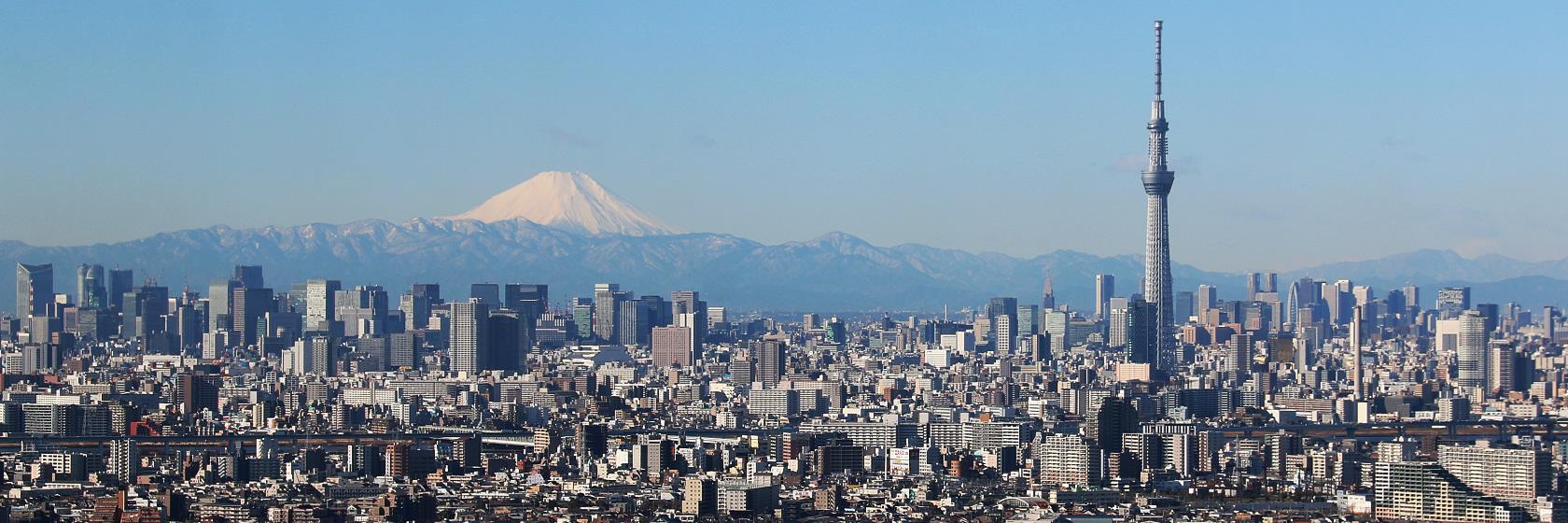
Tokyo (東京, Tōkyō) is Japan's capital
and the world's most populous metropolis. It is also
one of Japan's 47 prefectures, consisting of 23
central city wards and multiple cities, towns and
villages west of the city center. The Izu and
Ogasawara Islands are also part of Tokyo.
Prior to 1868, Tokyo was known as Edo. Previously a
small castle town, Edo became Japan's political
center in 1603 when Tokugawa Ieyasu established his
feudal government there. A few decades later, Edo
had grown into one of the world's largest cities.
With the Meiji Restoration of 1868, the emperor and
capital moved from Kyoto to Edo, which was renamed
Tokyo ("Eastern Capital"). Large parts of Tokyo were
destroyed in the Great Kanto Earthquake of 1923 and
the air raids of 1945.
Today, Tokyo offers a seemingly unlimited choice of
shopping, entertainment, culture and dining to its
visitors. The city's history can be appreciated in
districts such as Asakusa and in many excellent
museums, historic temples and gardens. Contrary to
common perception, Tokyo also offers a number of
attractive green spaces in the city center and
within relatively short train rides at its
outskirts.
Top attractions in Tokyo
1. Tokyo DisneySea
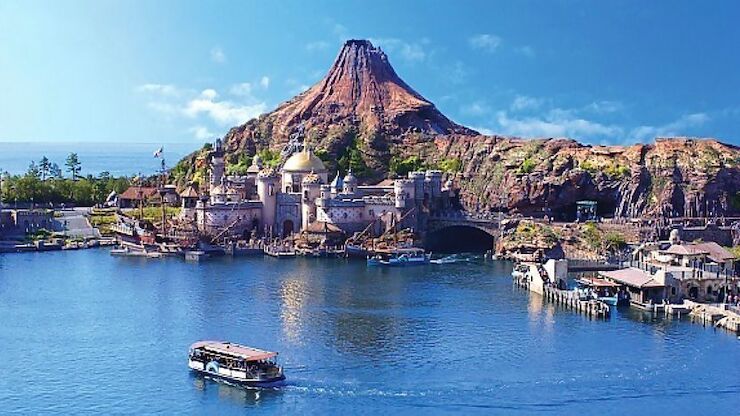 Tokyo DisneySea is a fantasy theme park in Tokyo
Disney Resort that is unique to Japan. Inspired by
the myths and legends of the sea, Tokyo DisneySea is
made up of eight themed ports of call: Mediterranean
Harbor, Mysterious Island, Mermaid Lagoon, Arabian
Coast, Lost River Delta, Port Discovery, American
Waterfront and Fantasy Springs.
Tokyo DisneySea is a fantasy theme park in Tokyo
Disney Resort that is unique to Japan. Inspired by
the myths and legends of the sea, Tokyo DisneySea is
made up of eight themed ports of call: Mediterranean
Harbor, Mysterious Island, Mermaid Lagoon, Arabian
Coast, Lost River Delta, Port Discovery, American
Waterfront and Fantasy Springs.
While suitable for all ages, Tokyo DisneySea was
designed to specifically also appeal to a more grown
up audience. The park addresses the Japanese
visitors' strong interest in good food by providing
a wider selection of table service restaurants than
Tokyo Disneyland.
2. Tokyo National Museum
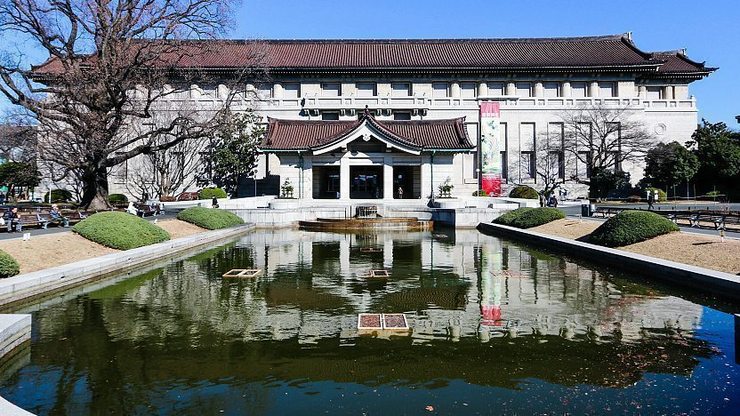 The Tokyo National Museum (東京国立博物館, Tōkyō Kokuritsu
Hakubutsukan) is the oldest and largest of Japan's
top-level national museums, which also include the
Kyoto National Museum, the Nara National Museum and
the Kyushu National Museum. It was originally
established in 1872 at Yushima Seido Shrine and
moved to its current location in Ueno Park a few
years later.
The Tokyo National Museum (東京国立博物館, Tōkyō Kokuritsu
Hakubutsukan) is the oldest and largest of Japan's
top-level national museums, which also include the
Kyoto National Museum, the Nara National Museum and
the Kyushu National Museum. It was originally
established in 1872 at Yushima Seido Shrine and
moved to its current location in Ueno Park a few
years later.
The Tokyo National Museum features
one of the largest and best collections of art and
archeological artifacts in Japan, made up of over
100,000 individual items including nearly a hundred
national treasures. At any one time, about 4000
different items from the permanent museum collection
are on display. In addition, visiting temporary
exhibitions are also held regularly. Good English
information and audio guides are available.
3. Shibuya
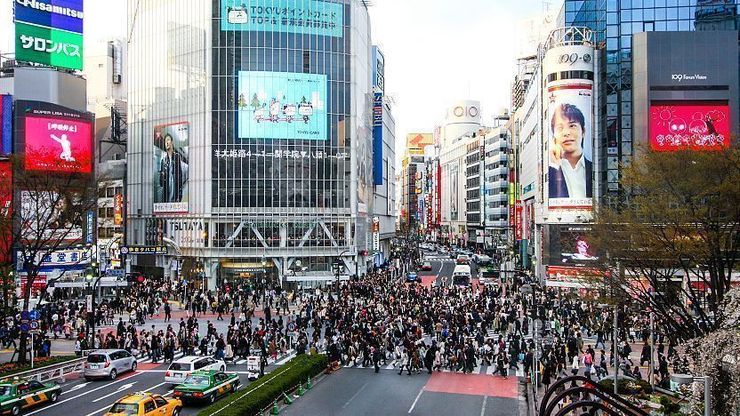 Shibuya (渋谷) is one of the 23 city wards of Tokyo,
but often refers to just the popular shopping and
entertainment area found around Shibuya Station. In
this regard, Shibuya is one of Tokyo's most colorful
and busy districts, packed with shopping, dining and
nightclubs serving swarms of visitors that come to
the district everyday.
Shibuya (渋谷) is one of the 23 city wards of Tokyo,
but often refers to just the popular shopping and
entertainment area found around Shibuya Station. In
this regard, Shibuya is one of Tokyo's most colorful
and busy districts, packed with shopping, dining and
nightclubs serving swarms of visitors that come to
the district everyday.
Shibuya is a center for youth fashion and culture, and its streets are the birthplace to many of Japan's fashion and entertainment trends. Numerous department stores and shopping malls can be found around the area catering to all types of shoppers. Many of the area's large shopping complexes belong to either Tokyu or Seibu, two competing corporations.
4. Tokyo Disneyland
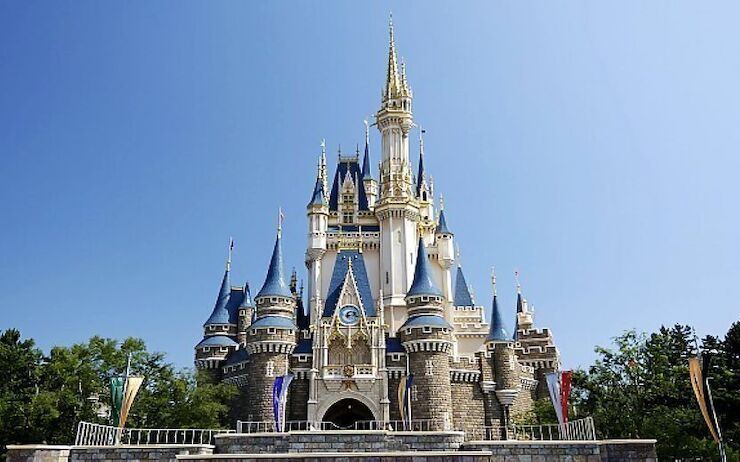 Tokyo Disneyland is a theme park based on the films
produced by Walt Disney. It was opened in 1983 as
the first Disney theme park outside of the United
States. Modeled after Disneyland in California and
the Magic Kingdom in Florida, Tokyo Disneyland is
made up of seven themed lands and features seasonal
decorations and parades.
Tokyo Disneyland is a theme park based on the films
produced by Walt Disney. It was opened in 1983 as
the first Disney theme park outside of the United
States. Modeled after Disneyland in California and
the Magic Kingdom in Florida, Tokyo Disneyland is
made up of seven themed lands and features seasonal
decorations and parades.
5. Tokyo Skytree
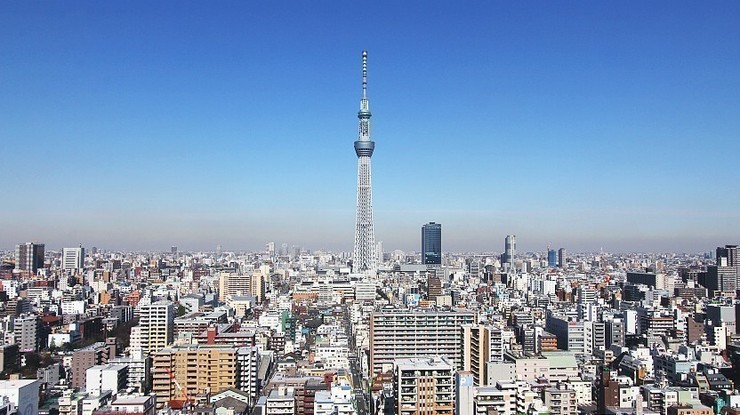 The Tokyo Skytree (東京スカイツリー) is a television
broadcasting tower and landmark of Tokyo. It is the
centerpiece of the Tokyo Skytree Town in the Sumida
City Ward, not far away from Asakusa. With a height
of 634 meters (634 can be read as "Musashi", a
historic name of the Tokyo Region), it is the
tallest structure in Japan and was the second
tallest in the world at the time of its completion.
A large shopping complex with an aquarium is located
at its base.
The Tokyo Skytree (東京スカイツリー) is a television
broadcasting tower and landmark of Tokyo. It is the
centerpiece of the Tokyo Skytree Town in the Sumida
City Ward, not far away from Asakusa. With a height
of 634 meters (634 can be read as "Musashi", a
historic name of the Tokyo Region), it is the
tallest structure in Japan and was the second
tallest in the world at the time of its completion.
A large shopping complex with an aquarium is located
at its base.
The highlight of the Tokyo Skytree is its two observation decks which offer spectacular views out over Tokyo. The two enclosed decks are located at heights of 350 and 450 meters respectively, making them the highest observation decks in Japan.
6. Shinjuku
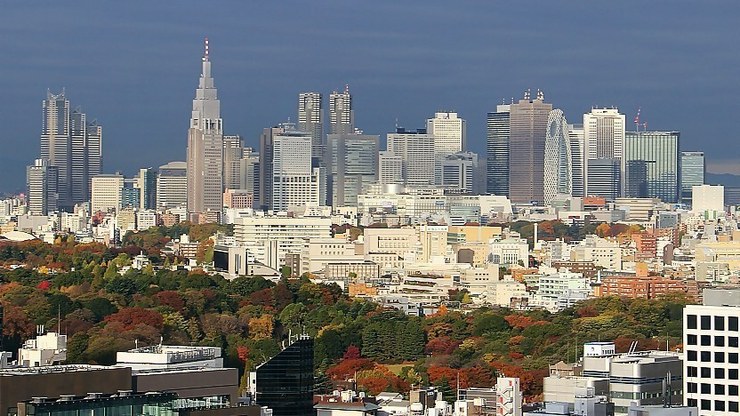 Shinjuku (新宿) is one of the 23 city wards of Tokyo,
but the name commonly refers to just the large
entertainment, business and shopping area around
Shinjuku Station.
Shinjuku (新宿) is one of the 23 city wards of Tokyo,
but the name commonly refers to just the large
entertainment, business and shopping area around
Shinjuku Station.
Shinjuku Station is the world's busiest railway
station, handling more than two million passengers
every day. It is served by about a dozen railway and
subway lines, including the JR Yamanote Line.
Shinjuku is also one of Tokyo's major stops for
long-distance highway buses. A large bus terminal,
named Busta Shinjuku, is conveniently located on top
of the railway station.
Tokyo: Getting there and around
1. How to get to Tokyo
By air - Tokyo has two airports:
Narita Airport
handles the majority of international flights and
only a small number of domestic flights. It is
located 60 kilometers outside of central Tokyo. The
more centrally located
Haneda Airport handles a
smaller number of international flights and the
majority of domestic flights.
By shinkansen - Most
shinkansen lines lead to Tokyo.
The trip from Osaka/Kyoto takes about three hours.
There are also direct trains to/from Kyushu,
Kanazawa, Niigata and various destinations in the
Tohoku Region and Hokkaido.
2. Getting around
Tokyo is covered by a dense network of
train,
subway and
bus lines,
which are operated by about a dozen different
companies. The train lines operated by JR East and
the subway lines are most convenient for moving
around central Tokyo.
Tokyo's most prominent train line is the
JR Yamanote Line,
a loop line which connects Tokyo's multiple city
centers. The city's 13 subway lines are operated by
two companies and run largely inside the Yamanote
circle and the areas around
Ginza and
the area east of the loop line. Most of the many
suburban train lines commence at one of the six
major stations of the
Yamanote Line
(Tokyo, Ueno, Ikebukuro, Shinjuku, Shibuya and
Shinagawa).